
I’ve watched too many sharp bettors burn through incredible runs simply because they handled their bankroll like pocket change. Raw picking talent is worthless if you can’t stay in the game long enough for the math to work in your favor. Bankroll management isn’t a boring side note—it’s the entire framework for survival. I treat my sports betting account like a business, not a lottery ticket, and that change in mindset is the single biggest reason I still have skin in the game season after season.
Why Bankroll Management Serves as Your True Edge
Most recreational bettors fixate over locating the perfect pick while neglecting the one variable they can completely control: how much they stake. I learned early that even a 55% win rate over thousands of bets can siphon money if the wager sizes are all over the place. The sports betting markets at LalaBet Casino are sharp, and edges are thin. A structured bankroll approach won’t promise wins, but it ensures I won’t go broke during a normal downswing. That staying power is the real advantage.
I regard my bankroll as ammunition. If I scatter it randomly, I’m out of the fight before the real battle begins. A disciplined staking plan lets me withstand losses without panic, so I can continue firing when I spot genuine value. Whether I’m studying LalaBet’s match previews or searching for a mispriced underdog, my confidence comes from knowing my next wager is already measured, not a reckless all-in grab.
Why Gut Feelings Wreck Bankrolls
Human intuition is a nightmare for sizing bets. After a big win, I feel invincible and want to push hard. After a brutal loss, I feel the urge to chase. Both impulses ruin accounts. By locking myself into a mechanical bankroll system, I eliminate those emotional swings off at the knees. I don’t quarrel with my rules. I simply obey them, which keeps my brain’s worst instincts out of the decision loop entirely.
Using Tools and Features to Keep Disciplined
Modern sportsbooks provide built-in tools that act like a bankroll safety net, and I use them aggressively. On LalaBet Casino’s sports betting platform, I configure deposit limits that align with my predetermined bankroll refresh schedule. If I’ve designated a monthly top-up, I lock myself out of spontaneous deposit impulses. Reality check notifications also appear during longer sessions, and I regard those alerts as a mandatory pause to ask myself: “Am I still betting my system?”
I also utilize bet history logs to audit my staking patterns. At the end of each month, I download my settled bets and contrast my actual unit sizes against the plan I created at the start. Detecting a bet that somehow edged to 7% of my bankroll is a red flag that I handle immediately. That self-audit, coupled with the responsible gaming tools available, transforms good intentions into enforceable behavior. The system works only if I run the system.
One underrated feature I rely on is the early cash-out option for live bets, but I consider it strictly as a risk-management tool, not a knee-jerk escape hatch. I only employ it when it fits with my pre-planned exit strategy, like guaranteeing a profit when a key player gets injured. That discipline blocks me from bleeding value through panic cashes while still providing me a lever to safeguard the bankroll during chaotic match shifts.
At what point and In what way I Cash out Profits
Profit is only genuine when it hits my personal bank account. I’ve seen too many bettors let a ballooning sportsbook balance lull them into a false sense of security, only to see it vanish during a downswing. I set a withdrawal schedule that’s detached of my betting mood. Every time my bankroll reaches 150% of its original size, I pull out 20% of the excess as pure profit. That cash is out from the betting ecosystem forever, rewarding my discipline.
The psychological boost from a withdrawal is enormous. It transforms abstract numbers into tangible rewards. I can treat myself to a nice dinner or fund a non-betting hobby, which reminds my brain that this is a structured pursuit with real-world benefits. It also keeps my active bankroll from growing so large that I start to feel anxious about the absolute sums I’m risking on a single bet.
The Key Strategies: Flat Betting Compared to Percentage Betting
I’ve tried nearly every staking method out there, and two consistently rise to the top for serious sports bettors: flat betting and percentage-based betting. Both have distinct personalities. Flat betting is the steady guard that resists to change unit size no matter what. Percentage betting adjusts fluidly, expanding and shrinking with the bankroll. I’ve employed both profitably, and the right choice depends entirely on my mental makeup at the time.
Flat Betting: The Steady Approach
With flat betting, I risk exactly the same amount on every play. If my unit is 10 euros, every straight bet is 10 euros, irrespective of whether I’m betting a heavy favorite or a longshot. This method eliminates the temptation to chase and makes record-keeping stupidly simple. I love flat betting when I’m pushing out volume across many leagues, because it drives me to find value in raw win percentage rather than stake manipulation.
The downside is that flat betting doesn’t protect my bankroll as aggressively during a downswing. If I lose 15 units, I’m still placing the same absolute amounts until I manually adjust. To offset that, I set a hard redraw point: if my bankroll drops by 25%, I recalibrate the flat unit to match the new, lower total. That manual adjustment offers me the discipline of the flat approach without allowing a cold streak wipe me out completely.
Percentage Betting: Dynamic Growth
Percentage betting means my wager is always a fixed fraction of my current bankroll. If I’m betting 2% per play, kazino lalabet, a 1,000-euro bankroll means 20-euro bets. If my bankroll climbs to 1,200, that same 2% becomes 24 euros. This method automatically compounds wins and shrinks after losses, which mathematically enhances long-term growth while removing the risk of total ruin. I perceive like a portfolio manager rather than a gambler.
There’s a psychological catch, though: after a heater, the larger absolute stakes can scare me. Watching 2% of a much bigger roll ride on a single match sometimes triggers hesitation. To address that, I occasionally limit my maximum bet size without regard to percentage growth. Having a ceiling preserves me calm, so I never bet an amount that makes my stomach drop when the live odds start moving on the LalaBet platform.
Setting Stop-Loss and Win Goals to Preserve Profits
I never take a seat for a betting session without a stop-loss limit. For a single day, my absolute pain point is dropping 5% of my total bankroll. If I hit that number, the screens go dark. No chase bets, no doubling down, no late-night live betting desperation. A hard stop-loss transforms a terrible day into a minor dent instead of a bankroll extinction event. It also prevents the “I’ll win it back” spiral that has destroyed more accounts than bad luck ever could.
On the flip side, I set a soft win goal. If I’m up 10% in a single session, I slow down dramatically. I might still place one or two high-conviction plays, but I lock in the bulk of the profit. Greed is the enemy of long-term success. Walking away when I’m ahead creates the habit of booking wins. Over a year, those disciplined exits add up to a fatter bankroll than any reckless heater ever could.
I also utilize tiered protection. For example, if my bankroll reaches an all-time high, I immediately pull out a portion of the profit and leave the rest to compound. That tangible reward reinforces the system. When I see real money hitting my account from a LalaBet Casino withdrawal, it signals me that this isn’t just a scoreboard—it’s an income supplement that deserves the same discipline I’d apply to any serious side hustle.
Establishing Your Bankroll and Betting Units
Before I make a single wager, I determine a dedicated sports betting bankroll—an amount of money I can forgo without harming my rent, bills, or mental health. That number is untouchable. Once I have it, I break it down into units. A unit is a fixed percentage or dollar amount I use to normalize every bet. This eliminates the emotion away and transforms betting into a numbers game where I’m always employing the same language, no matter the sport or the odds.
Determining Your Starting Bankroll Honestly
I never fund my account with money I’ll need next week. My bankroll is disposable income, pure and simple. I ask myself: “If this vanished overnight, would my life change?” If the answer is yes, I decrease the amount until it’s a comfortable zero. The size doesn’t matter as much as the honesty behind it. Starting with 500 euros or 5,000, the principles are the same, and lying to myself about what I can afford is the fastest route to disaster.
On LalaBet Casino’s sportsbook, I keep that bankroll completely separate from any casino balance I might have. Blending the two blurs the waters and makes it impossible to track true betting performance. Clean separation lets me judge my handicapping skill without wondering whether a blackjack session skewed the numbers. I treat my sports betting funds like a standalone portfolio.
What Exactly Is a Unit?

For me, one bbc.co.uk unit equals one percent of my total bankroll. That’s not a universal law, but it’s the standard I trust. If my roll is 1,000 euros, one unit is 10 euros. This simple conversion keeps my stake sizes proportional to my current balance. When my bankroll grows, my units get slightly larger. When it shrinks, they shrink, shielding me from digging a deeper hole during a rough patch. It’s a self-correcting mechanism.
Maintaining a Betting Log That Truly Works
A betting log is a reflection I can’t escape. I track every wager: date, sport, market, odds, stake, reason for the bet, and result. The “reason” column is the key one. When I review it weekly, I spot patterns I’d otherwise miss. I find out whether I’m better at pre-match totals or live underdogs, and I eliminate the plays where my reasoning was “gut feel” rather than analysis. That self-awareness directly informs my bankroll allocation going forward.
I also track my closing line value. If I always beat the closing odds, I know I’m on the right side of the market. If I’m not, I’m probably overestimating my edge and should reduce my unit sizes. This objective metric maintains my ego in check. My log isn’t a diary of wins and losses—it’s a performance dashboard that tells me exactly when to push my advantage and when to retreat and reassess.
The Psychology of a Sustainable Bankroll
Numbers are easy. Our psychology is the real challenge. I can learn every staking formula out there, but unless I control my impulses after a bad beat, the strategy breaks down. A healthy bankroll is mainly a mental construct. I needed to condition myself to see losses as business expenses and wins as revenue, instead of ego boosts. Detaching my self-worth from the outcome of a single match has proven the toughest and most rewarding battle of my betting life.
Tilt-Proofing My Mindset
Tilt isn’t just a poker term. In sports betting, tilt manifests as wild overbetting after a referee’s bad call or a last-second goal that kills my ticket. When I feel that hot flush of injustice, I remove myself. I follow a rule: no bets for 30 minutes after a bad beat. That half-hour cooldown stops me from slamming a reckless parlay just to regain control. The LalaBet match previews can wait.
I also record every tilt episode. Noting down what triggered me, how much I wanted to bet, and what I actually did shines a harsh light on my patterns. Over time, I have identified recurring triggers—like betting on my favorite team with my heart instead of my head—and I now avoid those situations entirely. Awareness alone cannot solve tilt, but it provides me with the data I need to create better guardrails.
Detaching Emotion from Money
Money in my betting account is an instrument, not a trophy. I no longer check my balance after every settled bet because those small changes created too much emotional noise. Today I review my bankroll once a day, usually in the morning, with a cup of coffee and a clear head. That single check-in keeps me conscious of my position without letting the ups and downs take over my mood or my next round of selections.
One trick that helps me is converting my bankroll into percentages mentally. I do not view “I lost 200 euros”; I see “I lost 2%.” That small reframe helps losses feel manageable and wins feel incremental, which is precisely how a long-term process should feel. This mental shift took months to adopt, but it has contributed more for my staying power than any advanced predictive model I have ever created.
Customizing a Betting Plan for Different Sports
Not all sports have the same variance, so I don’t wager them all the same way. High-risk markets like player props or low-scoring soccer draws receive a reduced unit allocation, typically 1% or less. Standard spread or moneyline bets on major leagues, where the information is deeper and the odds are more accurate, can carry my standard 2% stake. I never manage a tennis futures bet the same as an NBA side—the risk profiles are completely different.
Seasonal rhythms matter too. During the grind of a long baseball season, I decrease my per-bet exposure because fatigue and randomness are greater. In sports I monitor closely with access to quality previews and breaking news, like those regularly featured on LalaBet’s platform, I’m more at ease taking a standard or slightly elevated position. My bankroll plan is a evolving document that changes with the calendar.
The 1-5% Strategy and Why It Holds Up
The sweet spot I live by is wagering from 1% to 5% of my bankroll on any one wager, and I seldom reach the upper limit. 1% represents a weak conviction play or a wager I’m experimenting with. Five percent is reserved for the rare moments when my model, the game, and the lines all scream peak advantage. Most of my action sits in the 2-3% sweet spot, which provides me with sufficient upside to count while holding the losses manageable mentally.
This percentage cap naturally protects me from the usual pitfall of overbetting “sure things.” I’ve learned that no bet is a guaranteed win. Even the most lopsided match can turn on a red card or a last-second shot. By strictly capping my risk, I guarantee that one freak event doesn’t delete a large portion of my carefully built bankroll. The 1-5% rule is an protective measure I fund with slightly slower growth, and it’s worth it.
Why I Avoid Gambling with Borrowed Funds
This is a strict boundary I never break. Betting with money that isn’t mine—even a casual loan—distorts every betting choice. The pressure to repay clouds judgment and forces stake amounts into hazardous areas. My bankroll is built only from my disposable income. That transparency helps me stay calm during losing runs. I never have to explain a bad month to anyone else, which keeps the entire operation emotionally clean and sustainable.
Typical Bankroll Killers and How I Avoid Them
Recovering losses is the evident killer, but there are more subtle traps. I’ve experienced the “parlay creep” many times: adding a few extra longshot legs onto a bet because the unit size is small, turning a disciplined single into a lottery ticket. Another unseen killer is wagering too many simultaneous matches, which reduces my edge and subjects me to correlated variance. I now restrict my daily open bets at a number that lets me to think clearly.
Hubris after a hot streak is another account destroyer. I’ll find myself thinking I can’t lose, and the moment I start believing that, my unit discipline weakens. I fight this by examining my worst losing streaks whenever I feel invincible. Checking old journal entries of five-bet slumps pulls me back to earth fast. Humility isn’t just a virtue in sports betting—it’s a financial necessity that directly safeguards the bankroll I’ve worked so hard to grow.
I also avoid the trap of increasing too fast. A 20% bankroll increase doesn’t mean my edge got bigger; it means variance smiled on me. If I immediately recalibrate to higher stakes, a reversion to the mean can destroy me. I slow my recalibration, only adjusting unit sizes after sustained, long-term growth that includes at least 500 bets. Patience in scaling is how I keep my compounding smooth rather than volatile.
Tailoring Your Bankroll for Live Betting
Live betting on the LalaBet platform is a thrill, but it’s also the quickest way to destroy a bankroll without strict rules. The rapid-fire nature of in-play markets can trick me into betting more regularly and on shakier information. To handle live betting, I decrease my unit size. If I normally risk 2% per pre-match play, I go down to 1% or even 0.5% for live bets. The volume grows, so the fractional approach keeps my total exposure flat.
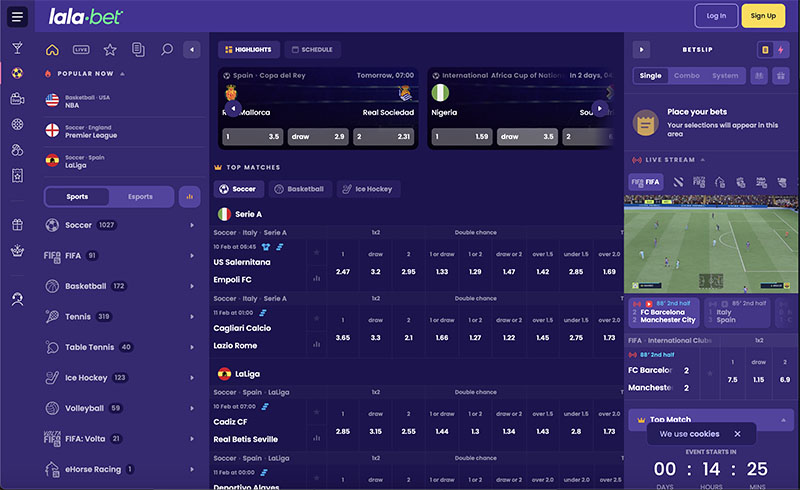
I also establish my live betting limits. Before a match kicks off, I decide exactly how many live bets I’m able to place and jot that number down. When I reach that cap, I shut the in-play screen, no matter how appealing the shifting odds look. The dynamic markets will always create a sense of urgency, but urgency is the enemy of disciplined sizing. I refuse let a ticking clock trick me into over committing.
Takeaways from a Decade of Controlling My Own Funds
I’ve blown small accounts, rebuilt them, and seen steady grinding beat flashy short-term bets every time. The biggest lesson is that bankroll management is not a one-time setup; it’s a daily practice. Just as LalaBet odds fluctuate constantly, my discipline demands ongoing fine-tuning. The moment I think I’ve “mastered” it, I’m in the greatest danger of destroying my own protections.
The bettors I admire most aren’t the loudest touts. They’re the calm players who never implode, who steadily compound 2% at a time, and who handle their bankroll like a pilot handles a pre-flight checklist. That’s the benchmark I pursue. It’s not exciting, but it gets results. And in a game where the casino always holds a statistical advantage, a strategy that keeps me active over time is the only genuine asset I need.
Conclusion
Bankroll management is not about being the smartest person in the room; it hinges on being the most steadfastly controlled. I’ve transformed what was once a chaotic hobby into a organized grind that accumulates over time. By establishing my units, capping my exposure, and using every tool at my disposal—including the responsible gaming features on LalaBet Casino’s sportsbook—I’ve afforded myself a real shot to outlive the market. Shield your bankroll first, and the wins will come on their own.
Leave a Reply